When I first came to the U.S., the two things that confused me the most were the different types of coffee at Starbucks and how to deal with garbage disposal. Strange, right? Looking back after three years, I still find it a bit funny.
Coffee
At Starbucks or similar places, I would be completely overwhelmed by the variety of options on the menu. It felt like too many choices all at once. So I would just wait for a friend — someone with similar tastes, at least when it came to spices and such — and order whatever they did, without really understanding what I was getting into. Sometimes it turned out amazing, and other times just okay.
Recently I stumbled across a few reels that explained things — how many shots of espresso, warm or cold water, milk ratios, all of that. Now I can finally order with confidence.
Garbage Disposal
I was mostly confused between Recycle and Compost. Take paper, for example — it can be composted, but it can also be recycled. Or reusable plastic bags — should they go in recycling or trash?
Over time I’ve gotten better at it, but I still second-guess myself sometimes. Like when I’m drinking coffee in a compostable cup with a straw — should the straw go in the compost, or the recycling bin? I usually end up throwing it in the compost and hoping for the best.
Recently I got a flyer in the mail that helped things click. Now I feel more confident doing my part to keep the environment clean by sorting things properly.
The Flyer That Helped It Click
Here’s the Seattle disposal guide that finally made things clear for me:
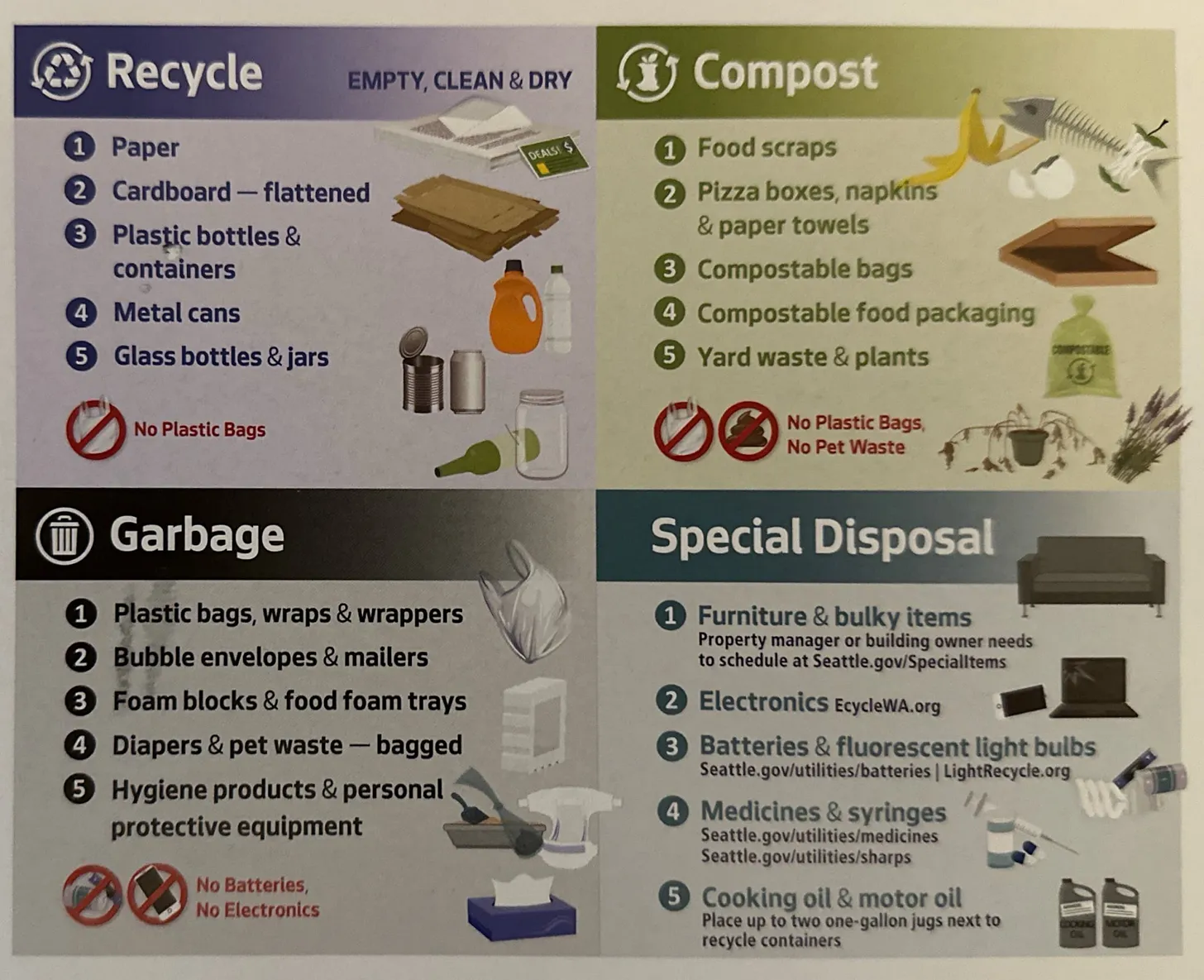
Recycle (empty, clean & dry) — paper, flattened cardboard, plastic bottles & containers, metal cans, glass bottles & jars. No plastic bags.
Compost — food scraps, pizza boxes/napkins/paper towels, compostable bags, compostable food packaging, yard waste & plants. No plastic bags, no pet waste.
Garbage — plastic bags/wraps/wrappers, bubble envelopes & mailers, foam blocks & food foam trays, diapers & bagged pet waste, hygiene products & PPE. No batteries, no electronics.
Special Disposal — furniture & bulky items (Seattle.gov/SpecialItems), electronics (EcycleWA.org), batteries & fluorescent bulbs (LightRecycle.org), medicines & syringes (Seattle.gov/utilities/medicines), cooking oil & motor oil (place up to two one-gallon jugs next to recycle containers).
Hope you have a great week ahead!